
ዓለም አቀፍ፡ የድንች መደብሮች የድንች ጥብስ ቀለምን ለመከላከል ከ1,200–5,000 ppm ውስጥ የካርቦን ዳይኦክሳይድ መጠንን መጠበቅ አለባቸው
ቁልፍ ማውጫዎች
- 400 ppm CO2 in outside air vs 3,000–5,000 ppm in stores
- 1,200–5,000 ppm is the max CO2 range cited by Idaho
- 0.25 ppm ethylene made high CO2 darken the fry colour
- 3.5 times faster tuber respiration at 25°C than at 10°C
ለምን አስፈላጊ ነው
- ለገበሬዎች
- Install or calibrate a CO2 sensor in each store and log readings with temperature; plan short fresh-air purges when levels approach 5,000 ppm
- ለአቀነባባሪዎች
- Ask suppliers for CO2 and ethylene logs for stored lots and link them to fry colour tests on intake
- ለአቅራቢዎች
- Offer CO2 and ethylene monitoring packages bundled with ethylene sprout-control contracts, since the gas combination drives the risk
የ60 ሰከንድ ማጠቃለያ
Carbon dioxide is a quality risk in potato stores mainly when it travels together with ethylene. Extension guidance from the United Kingdom and Idaho puts typical store air at 3,000 to 5,000 ppm, about ten times outdoor air, with peaks near 3%. Idaho specialists cite a ceiling somewhere between 1,200 and 5,000 ppm. A trial funded by AHDB found no fry colour penalty over 35 weeks at 10,000 ppm while ethylene stayed absent, yet with 0.25 ppm of ethylene every step up in CO2 produced darker fries. Warm tubers make the problem worse because respiration climbs steeply with temperature, and each gram of CO2 also brings 2.55 kcal of heat. The practical lesson is to measure gases, not only temperature, and to plan fresh-air purges, especially in crops kept under ethylene sprout control. Limits vary by region and store design, and the published trial did not report the variety or scale, so local processor specifications should take priority.
Carbon dioxide builds up quickly in closed potato stores after harvest. Outside air contains about 0.04% CO2, or 400 ppm, according to a University of Idaho storage glossary published in November 2025. Stores usually run at 0.3–0.5% CO2, which is 3,000–5,000 ppm, according to the levy board AHDB in the United Kingdom. That is roughly ten times the level in normal air.
CO2 can reach as high as 3% when tubers respire strongly, AHDB said. A University of Idaho bulletin from January 2024 states that the maximum CO2 level can vary from 1,200 to 5,000 ppm. The bulletin links elevated CO2 to higher reducing sugars, darker fry colour and off-flavours.
Ethylene changes the picture
An AHDB-funded trial compared two store closure regimes. One kept CO2 at 3,000 ppm with 48-hour closure. The other reached 10,000 ppm with 72-hour closure. After 35 weeks, fry colour did not differ significantly between the two regimes when ethylene was absent.
የሳምንቱ ቀናት። በአንድ ጠቅታ ከደንበኝነት ምዝገባ ይውጡ።
The result changed when ethylene was present at 0.25 ppm. Then higher CO2 gave darker fry colour, according to AHDB. The Idaho bulletin also warns that ethylene as low as 0.25 ppm can increase reducing sugars. This matters for stores that use ethylene against sprouting. It also matters for stores with sprouting or rotting tubers, which release ethylene.
Respiration, heat and airflow
Respiration produces both CO2 and heat. Each gram of CO2 released generates 2.55 kcal, according to the Idaho bulletin. Respiration at 42°F (5.6°C) is about 1.5 mg CO2 per kg per hour. At 48°F (8.9°C) it rises to about 1.7 mg. In one Idaho measurement, tubers of this variety respired 3.5 times faster at 77°F (25°C) than at 50°F (10°C): Clearwater Russet.
Fresh air is the only practical way to remove CO2. The ventilation rate for bulk storage in the United States ranges from 10 to 35 cubic feet per minute, the Idaho bulletin said. The right rate depends on the region.
ለምን አስፈላጊ ነው
Processors pay for fry colour, and colour defects are hard to reverse once sugars rise. Store managers should log CO2 alongside temperature and humidity. Short fresh-air purges are cheap compared with a rejected load.
The key risk is the combination of gases. A store that looks safe on CO2 alone may still darken fries if ethylene is present. Crops under ethylene sprout control need the closest CO2 watch.
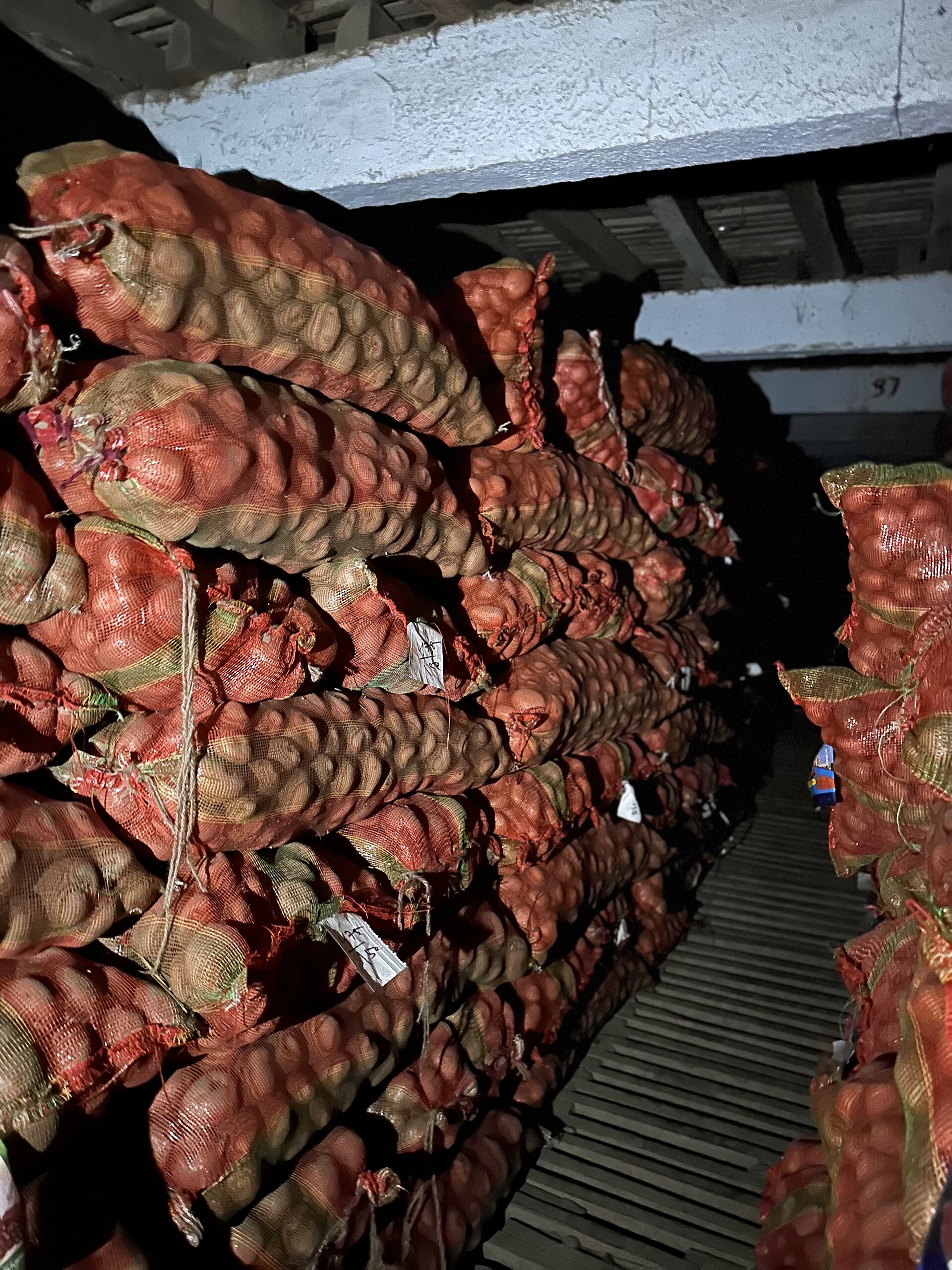
Photo: Potatoes in cold storage at Harduaganj, India (illustrative). Whispyhistory / የግልነት ድንጋጌ, CC በ-SA 4.0
ግሎባል ፖታቶ አጭር መግለጫ
አምስት ዋና ዋና ታሪኮች፣ ዋጋዎች፣ የበሽታ ማንቂያዎች እና ዝግጅቶች። የሳምንቱ ቀናት ጠዋት፣ ማስታወቂያ የለም።
ምንጮች
- AHDB — Potato store atmosphere: CO2 and processing quality — https://potatoes.ahdb.org.uk/knowledge-library/potato-store-atmosphere-co2-and-processing-quality
- University of Idaho Extension BUL 1061 — Respiration of Potatoes During Storage (January 2024) — https://content-hub.uidaho.edu/api/public/content/e9909ed5a5a44fa8b03eae5451393e42?v=c16e0439
- University of Idaho Extension BUL 1075 — Glossary of Common Potato Storage Terms (November 2025) — https://content-hub.uidaho.edu/api/public/content/3fd20ec5a5294723abd63341df62cdd6?v=56ade6d3
በዚህ ቁሳቁስ ውስጥ ተገናኝቷል
- አገር
- ዓለም
- ኩባንያዎች
- AHDB; University of Idaho


