ዓለም·መደብሮች·ዜና
ለ2026/2027 የድንች ማከማቻ ዝግጅት፡ የማከም፣ የኦዞን ማስወገጃ እና ቡቃያን የመከልከል ስልቶች
ቁልፍ ማውጫዎች
- Wet September lifting raises anthracnose risk
- Soft bacterial rot (Pectobacterium) also elevated
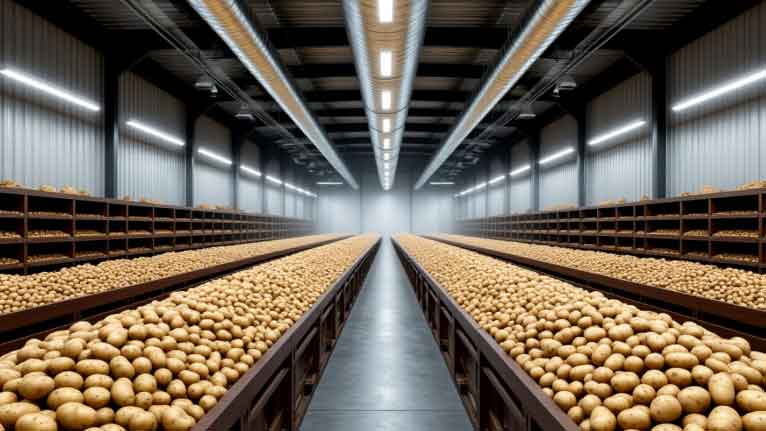
- Curing: 14 days at 15-18 C, 95% humidity
- Ventilation at 70 m³/h per tonne
- Ozonation cuts surface microbial load
ለምን አስፈላጊ ነው
- ለገበሬዎች
- Curing is not a formality this season: wounds from a wet lift are the entry point for Pectobacterium, and suberisation is what closes them before the pile is cooled.
- ለአቀነባባሪዎች
- Ozonation lowers microbial load in the store without residues, which matters where the crop goes into processing with clean-label requirements.
የ60 ሰከንድ ማጠቃለያ
Storage managers face raised risk of anthracnose and soft bacterial rot going into 2026/27, because wet conditions during September lifting combine soil moisture with harvest damage — the two things those pathogens need. The recommended answer is a curing period of 14 days at 15-18 °C and 95% relative humidity, with forced ventilation at 70 cubic metres an hour per tonne. That phase lets superficial wounds heal and suberise, forming a barrier against rot, while surface moisture is drawn off gradually. Ozonation during the same window disinfects the store atmosphere and lowers surface microbial load without leaving chemical residues.
14 ቀናትየመፈወስ ጊዜ
15-18 ሴየሙቀት መጠንን ማከም
95%relative humidity during curing
70 m³/h per tonneforced ventilation rate
ግሎባል ፖታቶ አጭር መግለጫ
አምስት ዋና ዋና ታሪኮች፣ ዋጋዎች፣ የበሽታ ማንቂያዎች እና ዝግጅቶች። የሳምንቱ ቀናት ጠዋት፣ ማስታወቂያ የለም።
በዚህ ቁሳቁስ ውስጥ ተገናኝቷል
- አገር
- ዓለም